If you're planning to list a Lake Chelan cabin sometime in the next year, here's a question worth asking before you call a photographer: does anyone have the as-built drawing for the septic system, and when was it last inspected?
Most sellers don't know the answer. That's not carelessness. It's because Chelan County has never required an answer at the point of sale, the way King, Skagit, and Island counties already do. But that gap is closing on a fixed date, and a second, unrelated permitting clock that already runs six months to a year is ticking on nearly every waterfront property with a dock. Sellers who treat these as future problems, rather than paperwork to start now, are the ones who watch a closing date slip by a season.
The Rule That Hasn't Landed Here Yet
Washington's statewide septic rule, WAC 246-272A-0270, sets a floor every county has to meet. Conventional gravity systems need an inspection at least once every three years. Everything else needs one annually. Starting February 1, 2027, the rule adds something new: a third-party inspection specifically tied to the sale of the property, with results submitted to the local health officer before the transfer can close cleanly.
That's less than five months from today.
Some counties didn't wait for the state deadline. King, Skagit, and Island counties already run their own transfer-inspection programs. Snohomish County adopted its version this spring, effective November 1, 2026, explicitly to get ahead of the same statewide requirement. Chelan-Douglas Health District's own septic pages describe permitting, installation, and the routine operation-and-maintenance schedule, the same three-year and annual cycles the state requires everywhere. What they don't describe, at least not yet, is a transfer-specific inspection program like the ones already running two hundred miles west.
That absence is the point. Chelan County sellers are operating in a window where the paperwork isn't required today but will be required by a fixed date next winter. Nothing about a septic system changes between now and February 2027. What changes is who has to prove it works, and when.
The Missing Piece Is Usually the Drawing, Not the Tank
When Snohomish County built its own version of this rule, it had to answer a practical question: what happens when a septic system predates good record-keeping? Its program requires either an as-built record drawing on file, or, if none exists, a site plan created by a certified septic contractor at the time of the inspection or pumping. That second option exists because it's common. A lot of systems installed decades ago were never mapped in a way anyone can find today.
Lake Chelan has a lot of those systems. Much of the valley's original lake-cabin stock predates the kind of digital land-use records Chelan County Community Development keeps now. When the transfer-inspection requirement does reach Chelan-Douglas Health District, and it will, because the state rule doesn't give counties a permanent opt-out, the properties most exposed won't be the ones with bad septic systems. They'll be the ones with fine septic systems and no drawing, which means a certified contractor has to generate one from scratch before the sale can proceed. That's not a same-week fix.
The practical move for anyone planning to sell in the next year or two: find out now whether an as-built drawing exists for your system. If it doesn't, that's a conversation to have with a septic professional this fall, not next spring when a buyer's inspection contingency is already running.
The Other Clock Nobody Mentions: Getting a Dock Approved
Septic is the rule everyone will eventually hear about because it applies to every property in the state. The dock permit process is the one that's specific to owning shoreline on this particular lake, and it's already in full effect.
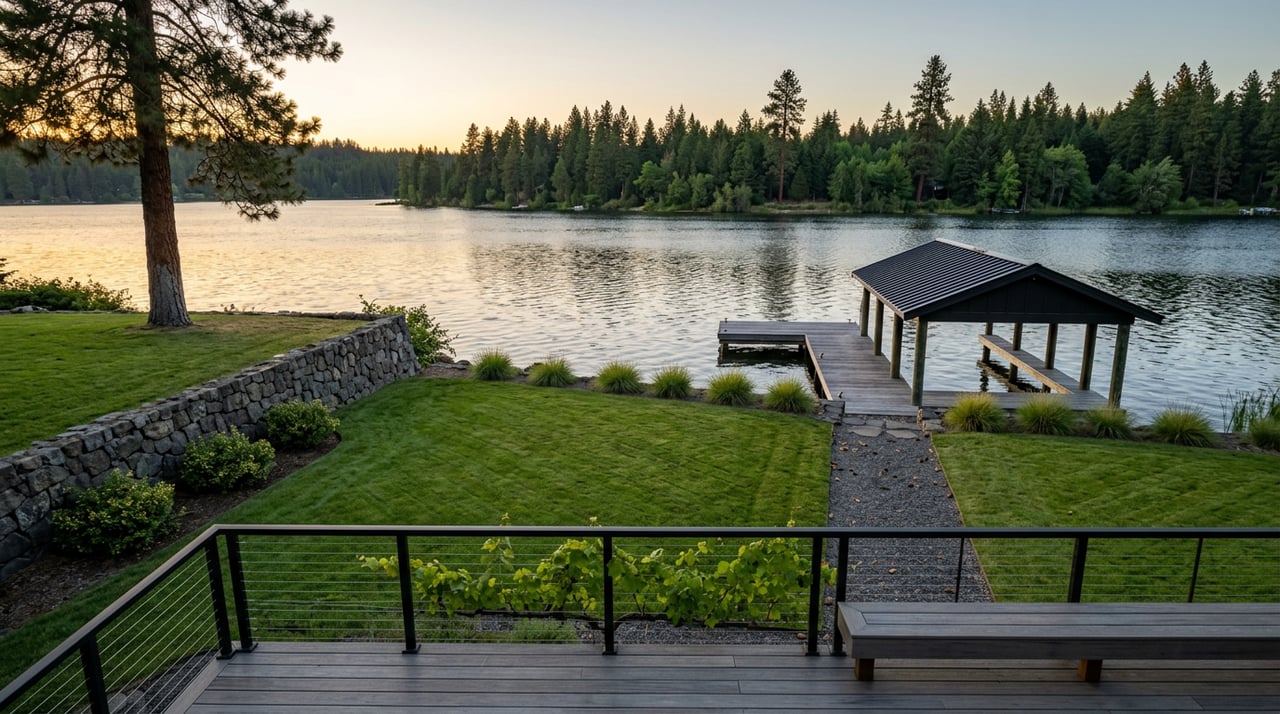
A new dock, a boat lift, or even meaningful repair work on Lake Chelan requires sign-off from multiple agencies at once. Local dock contractors point buyers and sellers toward County or City permits, Chelan County PUD, and often the Army Corps of Engineers, depending on the scope of the work. The Dock Company, which installs docks and mooring buoys around the lake, refers all of its permitting work to Grette Associates, an environmental consulting firm in Wenatchee, because the agency list is long enough that most contractors don't handle it themselves. Their own estimate for how long that process takes: six months to a year, simply because of how many agencies each permit runs through.
Mooring buoys carry a separate track. A residential property owner whose land touches state-owned aquatic land can use a buoy for free, but only after registering it with the Washington Department of Natural Resources and clearing whatever local, state, and federal permits apply. DNR is proposing changes to that statute heading into the 2027 legislative session specifically because unregistered buoys have become a persistent problem on state-owned aquatic lands. The rules around shoreline structures on this lake are getting more precise, not less, in roughly the same window as the septic deadline.
Part of what makes this slower here than on a typical residential sale is the lake itself. Chelan County's own shoreline planning documents note that winter lake-level management can expose anywhere from 40 to over 150 feet of former lakebed in some stretches, with the high-water line, not the current shoreline, as the reference point for setbacks and permitted structures. A dock that looks fully installed and functional in July can sit entirely on dry ground in January. Agencies reviewing a new dock application have to account for that seasonal swing, which is part of why review isn't a quick desk approval.
What This Means If You're Listing or Buying This Fall or Winter
Put these two timelines next to each other and the shape of the problem becomes clear. The septic rule is administrative and mostly invisible until it isn't, then it becomes a hard stop at closing. The dock permit process is already a hard stop, and has been for years, because it was never fast to begin with.
For a seller, the move is the same for both: don't wait for a buyer to ask. If you don't already have an as-built septic drawing, start that conversation with a certified contractor now, while there's no closing date pressuring the schedule. If your dock was added or repaired without a completed permit file, or you're not sure whether it was, that's worth confirming before you list, not after an inspection contingency surfaces it.
For a buyer, the same two questions belong in due diligence before the offer, not after. Ask for the septic system's inspection history and any as-built drawing. Ask whether the dock, boat lift, or buoy has a complete permit record, and if not, understand that adding or modifying one after closing could take the better part of a year, not a weekend project squeezed into a first summer of ownership.
None of this is about whether Lake Chelan waterfront is a good investment. It still is, for the same reasons it always has been: limited shoreline, high demand, and a lake that draws buyers back every season. It's about knowing which parts of a transaction are genuinely fast and which ones are running on a much longer clock than the calendar suggests.
FAQ
Does Chelan County currently require a septic inspection before a home can sell? Not as of today. Chelan-Douglas Health District's published septic program covers permitting, installation, and routine maintenance inspections on the same three-year and annual cycles the state requires everywhere, but it does not currently describe a transfer-specific inspection tied to the sale itself, the way King, Skagit, Island, and now Snohomish counties do. The statewide rule requires every county to have that piece in place by February 1, 2027.
How long should I budget for a new dock or boat lift permit on Lake Chelan? Local dock contractors typically quote six months to a year, because the approval routes through multiple agencies rather than a single local permit desk. Unlike the Columbia River, where in-water work is restricted to a fall and winter window, work on Lake Chelan itself can proceed year-round once the permits are in hand. The bottleneck is the paperwork, not the season.
What if I don't know whether my dock or septic system has a complete permit file? That's exactly the kind of question worth asking before a property goes on the market. A conversation with the right local resource, whether that's Chelan County Community Development, Chelan-Douglas Health District, or a licensed septic and dock professional, now saves weeks later.
Ready to figure out where your property stands on either clock? Find Your Chelan knows this valley, this lake, and the paperwork that comes with owning a piece of its shoreline. Start Your Lake Chelan Search today.