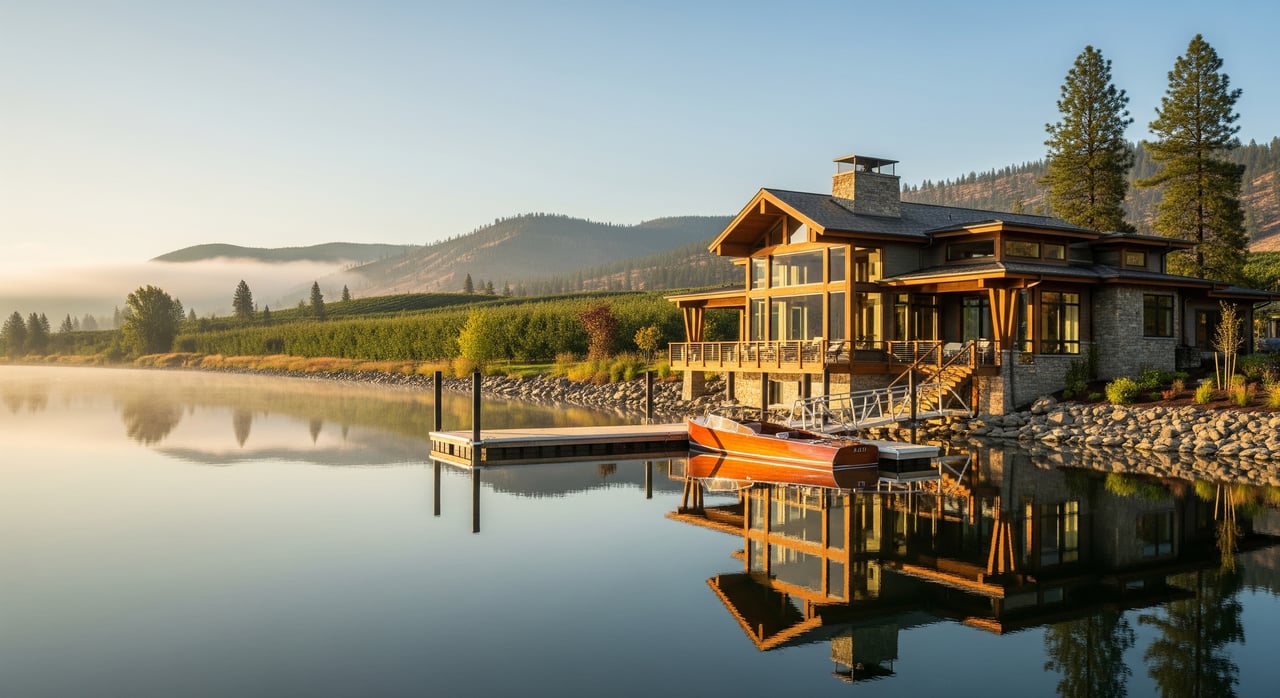
Picture this: you find the perfect cabin near the Columbia and Methow, a quiet place to unplug in Pateros. Now you are wondering how to finance it. Buying a second home feels different than buying your primary, and lenders treat it differently too. In this guide, you will learn which loan types fit second homes, what lenders expect, and how Pateros’s small-town market can shape your approval. Let’s dive in.
Second-home loan types explained
Conventional loans
Conventional conforming loans follow Fannie Mae and Freddie Mac guidelines and are commonly used for second homes. These loans usually require a higher down payment than a primary residence and a stronger credit profile. Many lenders expect documented cash reserves and a closer review of your debt-to-income ratio. For planning, set expectations in the 10 to 20 percent down range, depending on your profile and property.
Jumbo loans
If your price point rises above the conforming loan limit, you will move into jumbo financing. Jumbo underwriting is stricter for second homes. Lenders often require 20 percent or more down, higher credit scores, and larger reserves. Rates can be similar to or higher than conforming, based on the market and your risk profile.
Portfolio loans
Community banks and credit unions that keep loans in-house can be more flexible. In rural markets like Pateros, a portfolio lender may work with nonstandard properties, unique income patterns, or limited comparable sales. Terms vary widely, and flexibility often comes with higher rates or stronger reserve requirements, but portfolio options can solve for the realities of a small market.
Government programs
FHA, VA, and USDA programs generally require owner occupancy as a primary residence. That means they are not normally options for second homes. If you need a lower down payment, you will likely need to explore that on your primary residence rather than the vacation property.
Use equity from your current home
Some buyers tap equity in a primary home using a cash-out refinance, a home-equity loan, or a HELOC to help fund a second-home purchase. This can be useful if you have substantial equity. Keep in mind this places a lien on your primary home and changes your overall loan-to-value, so factor the risks, costs, and tax implications into your decision.
Occupancy rules affect terms
Second home vs investment property
Lenders classify properties as primary, second home, or investment. A second home is typically owner-occupied seasonally or periodically and suitable for year-round use. Compared to a primary, second-home terms often include a larger down payment, stricter credit and reserve expectations, and sometimes slightly higher rates. If you intend to rent the property as a primary source of income, lenders may categorize it as an investment, which usually requires an even larger down payment and more reserves.
Short-term rentals and HOA rules
Many lenders expect a true second home will not be primarily rented out. Some allow occasional short-term rental use, while others limit it. If you are eyeing a condo or a home in an HOA, review rental rules and project approval status early. HOA restrictions and project approvals can affect eligibility and the type of financing available.
What lenders look for
Down payment
For second homes with conventional financing, many lenders expect 10 to 20 percent down, with stronger profiles often at 15 to 20 percent. Jumbo financing usually starts at 20 percent or more. Investment properties typically require even higher down payments.
Credit, DTI, and reserves
Second-home and jumbo borrowers are generally expected to have stronger credit scores, often in the upper 600s to 700s or higher, depending on the lender. Debt-to-income limits are commonly tighter for second homes. Plan for several months of cash reserves, which can range from a few months up to a year of mortgage payments depending on loan type and profile.
Appraisal and valuation
In a small town like Pateros, there may be fewer recent comparable sales. Expect a full appraisal rather than an automated valuation. Appraisal timelines can run longer if appraisers must travel or if comps are limited, so build cushion into your contract.
Property suitability
Lenders expect a second home to be suitable for year-round occupancy unless they allow a clearly seasonal property. Unique use cases, condos, or HOA restrictions can prompt extra review. Clarify use and occupancy early in the process.
Insurance and hazards
Pateros is in a region with historic wildfire activity and sits near river systems. Lenders will require hazard insurance and, if applicable, flood insurance. Availability and premiums for wildfire or flood coverage can influence your monthly costs and overall eligibility. Check flood-zone status early and obtain insurance quotes when building your budget.
Pateros-specific factors to plan for
- Small-market dynamics: Limited inventory and infrequent sales can make appraisals more challenging. Lenders may scrutinize valuation sustainability, especially for waterfront or river-access properties.
- Lender mix: National banks offer broad conforming and jumbo products. Local and regional banks or credit unions that hold loans in portfolio may be more familiar with Pateros properties and flexible on rural details.
- Short-term rental considerations: If you are counting on short-term rental income, be clear about your use. Some second-home programs limit rental activity. HOA and local rules also matter.
- Closing costs and taxes: Washington’s real estate excise tax applies to most transactions. Include jurisdictional costs and standard closing fees in your budget.
How to compare lenders
Start with a true pre-approval so you know your maximum loan size, down payment expectation, and reserve requirement. Then compare lenders on the details that matter in a second-home purchase.
- Product fit: Do they offer conventional second-home loans, jumbo, and portfolio options if needed?
- Minimums: What is the minimum down payment for your price range? What credit score and DTI do they expect?
- Reserves: How many months of reserves are required for your profile and loan size?
- Rental policy: How do they treat occasional short-term rentals? Are there occupancy distance rules?
- Insurance: Do they require flood or wildfire endorsements for your target area? How will premiums affect qualification?
- Appraisal approach: What is their process in a rural market like Pateros? Do they allow alternative valuations?
- Timeline: What is the typical application-to-close timeline, especially if an appraiser must travel?
- Portfolio vs sale: Will they hold the loan in portfolio or sell it to Fannie, Freddie, or a private investor? How could that affect flexibility and servicing?
Smart questions to ask
- Do you offer second-home financing for properties in Okanogan County, including rural locations?
- What down payment and reserve levels do you usually require for a second home at my price point?
- How do you view occasional short-term rental use for a second home?
- What insurance or hazard coverage will you require near river systems or in wildfire-prone areas?
- How long does your appraisal and closing process take in a market with limited comps?
Budget and timeline checklist
Use this simple plan to move from idea to keys in hand.
- Pre-approval and budgeting
- Get pre-approved with one or more lenders so you understand price range, down payment, and reserves.
- Ask for estimated monthly payments that include insurance assumptions and any required flood or wildfire coverage.
- Property due diligence
- Confirm occupancy classification as a true second home rather than an investment.
- Verify HOA or condo rental rules and project approval status if applicable.
- Check flood-zone status and obtain hazard insurance quotes early.
- Offer and contingencies
- Allow extra time for appraisal if comps are sparse or if an appraiser must travel. Build that into your timeline.
- Keep documentation ready: tax returns, W-2s or pay stubs, bank statements, identification, and your purchase contract.
- Appraisal to closing
- Respond quickly to lender conditions, especially around reserves and insurance.
- Coordinate final numbers, including Washington excise tax and standard closing fees, so there are no surprises.
Putting it all together
Financing a second home in Pateros is absolutely achievable when you pick the right loan fit and plan for small-market dynamics. Your key levers are occupancy classification, down payment and reserves, and insurance impacts. With a strong pre-approval, realistic appraisal timeline, and clear expectations around rental use, you position yourself to compete for the right property.
If you want local guidance on neighborhoods, seasonality, and writing a clean, competitive offer, connect with Lukas Sztab. Let’s align your financing plan with the right properties and timeline. Start Your Lake Chelan Search.
FAQs
Can I use FHA, VA, or USDA for a Pateros second home?
- Generally no. These programs are designed for primary residences and typically require owner occupancy.
How much down payment is typical for a Pateros second home?
- Many lenders expect 10 to 20 percent down for conventional second homes, while jumbo loans often require 20 percent or more.
Will my second-home mortgage rate be higher than my primary?
- Often yes. Lenders view second homes as higher risk, which can lead to slightly higher rates or stricter terms.
Is financing harder in a small town like Pateros?
- It can be, due to limited comparable sales and fewer specialized lenders. Portfolio lenders and brokers can offer useful flexibility.
Can I rent out my Pateros vacation home short-term and still get a second-home loan?
- Possibly, but many lenders limit or restrict short-term rental activity for second-home financing, and HOA rules also apply.